Refinishing the hardwood floors in a historic Tacoma or Seattle home is less about installing something new and more about uncovering what is already there. Under decades of finish and wear, these floors are usually old-growth Douglas fir or oak that was milled when the trees were already a century old. After 15 years working on Puget Sound homes, our approach is simple: sand only what we must, preserve the original character, and treat the floor as the irreplaceable part of the house that it is.
What makes Puget Sound historic homes special
Tacoma's North Slope Historic District is one of the largest historic districts in the country, with more than 950 properties and nearly 80 percent of its homes built before 1930. Construction came in waves, with a major boom from 1902 to 1915, leaving behind Queen Anne, Craftsman, American Foursquare, and other early-20th-century styles. Just to the south, the Stadium-Seminary Historic District grew between roughly 1888 and 1930 with substantial two- and three-story homes. Across the water, Seattle's Craftsman bungalows fill neighborhoods like Wallingford, Ravenna, Ballard, Mount Baker, and West Seattle, where Pacific Northwest Douglas fir was used heavily because the timber was right here.
What ties these homes together for us is the wood itself. Old-growth fir and oak from the early 1900s is tight-grained, dense, and dimensionally stable in a way that newer flooring rarely matches. The boards are often narrow strip or quarter-sawn, the construction predates modern fasteners, and the floor has usually been living its life for well over a hundred years. That history is exactly what we are protecting when we refinish it.
Dealing with old finishes: shellac, wax, and early varnish
Before the 1940s, floors were typically finished with shellac or early varnish, often with paste wax buffed on top. These finishes behave very differently from the polyurethanes used today. A wax-over-shellac floor is beautiful but fragile, and it can gum up sandpaper and clog equipment if it is not handled correctly. Part of doing this work well is testing the existing finish first and adjusting the process to it, rather than assuming every old floor sands the same way. Getting that wrong wastes abrasive, scorches wood, and can leave a blotchy floor that no topcoat will fix.
Matching, patching, and the boards that are gone
The hardest part of restoring a historic floor is rarely the sanding. It is the patching. When boards are damaged, water-stained, or missing where a wall or radiator once stood, we have to find replacements that match the original grain. The catch is that old-growth fir and oak with this tightness of grain is largely no longer milled, so a perfect match is not always available off a shelf. Our job is to source the closest grain we can, often from salvaged stock, and then blend and feather the repair into the surrounding floor so the eye does not catch the seam.
- We refinish and repair original boards wherever they can be saved, rather than replacing whole sections by default.
- When boards must be replaced, we hunt for salvaged old-growth stock that matches the species, cut, and grain of the original floor.
- We feather new boards into the existing field so the repair blends rather than stands out as a patch.
- We weigh refinishing versus partial replacement honestly, because over-replacing a historic floor erases the character that makes it valuable.
Why dustless sanding matters in an occupied historic home
Dustless sanding means our sanding equipment is connected directly to an industrial HEPA-filtered vacuum that captures wood dust at the point it is created, before it can drift through the house. HEPA filtration traps particles down to around 0.3 microns, and a well-run dustless setup captures the large majority of the dust at the source. It is not a magic guarantee of zero dust, but the difference inside an occupied home is dramatic compared with traditional sanding, which sends fine dust into every room.
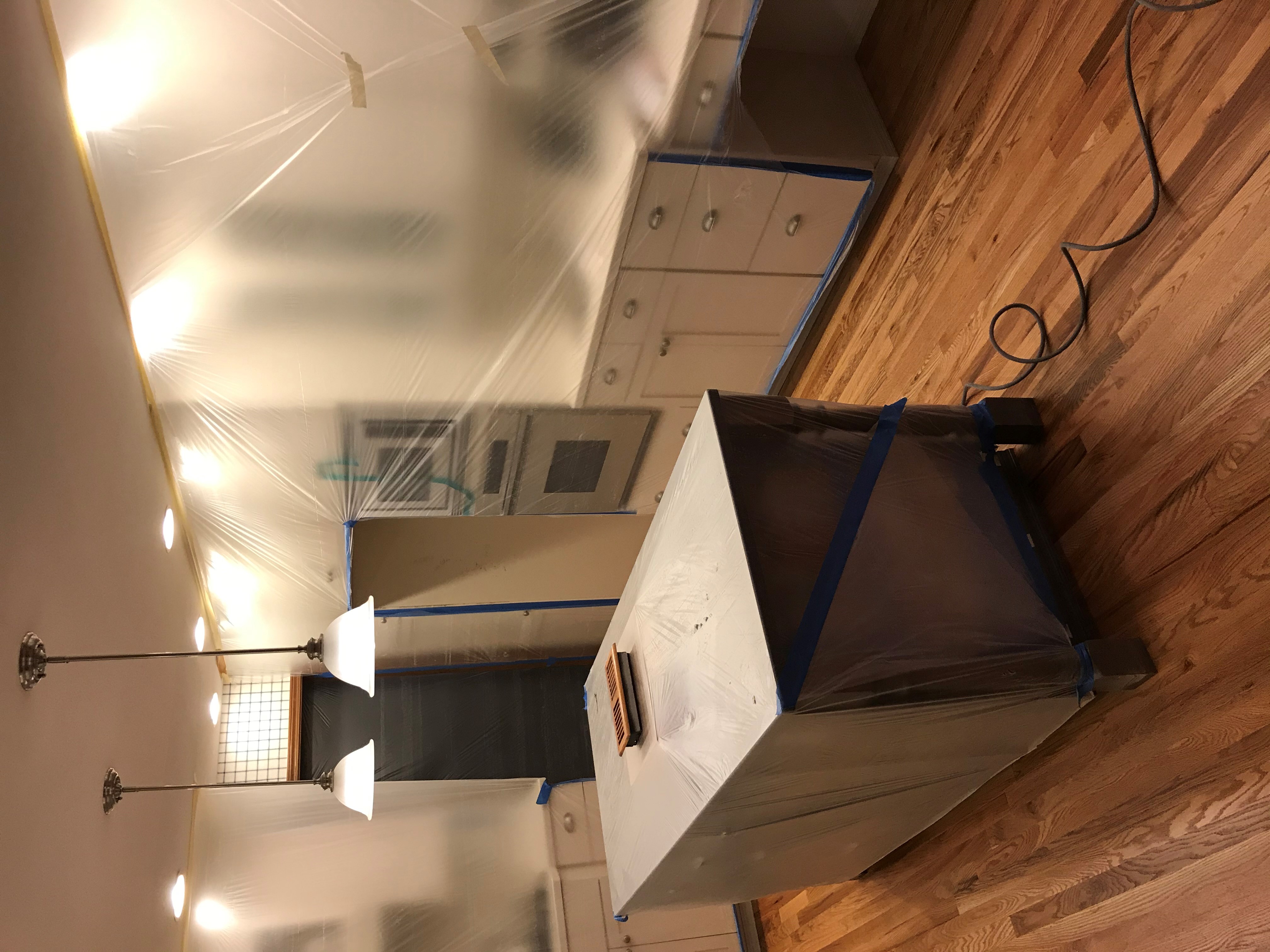
In a historic home, that containment is not just about convenience. Fine sanding dust settles into original plaster walls, picture rails, built-in cabinetry, leaded glass, and ornate trim that you cannot simply wipe down without risk. Keeping the dust out of those surfaces protects the details that make the home what it is, and it protects the indoor air for the family and pets who are often still living there during the project.
Respecting the rest of the house
A historic floor does not exist in isolation. We work carefully around original baseboards, floor registers, thresholds, and built-ins, masking and protecting them rather than tearing them out for convenience. Near old plaster, we are deliberate, because plaster cracks and crumbles in ways drywall does not. The goal is for the floor to look beautifully restored while every other original element in the room is exactly as it was, only cleaner.
Why experienced hands matter on irreplaceable floors
An old-growth fir or oak floor can be sanded only so many times before it runs out of wood. There is no undo button and no replacement that will ever quite match it. That is why experience matters more on a historic floor than almost anywhere else in the trade. Knowing how aggressively to sand, how to read an old finish, when to repair instead of replace, and how to bring back warmth without flattening the patina is the difference between a floor that looks restored and one that looks ruined. We treat every one of these floors like it cannot be replaced, because it cannot.
"On a hundred-year-old floor, the skill is knowing how little to take off, not how much. You only get so many sandings before the history is gone."
If you own a historic home in Tacoma, Seattle, or anywhere around the Puget Sound and you are wondering whether your floors can be saved, they very often can. We are glad to walk through your home, look at the wood and the existing finish, and talk through your options in person. Reach out for a free estimate and we will give you an honest read on what your floor needs.
Frequently Asked Questions
In most cases they can and should be refinished. Old-growth fir and oak from the early 1900s is dense and high quality, and the wood under the old finish is usually in far better shape than homeowners expect. We only recommend replacing boards that are genuinely beyond saving, and even then we patch in matching wood rather than tearing out the whole floor.
Dustless sanding connects the sander directly to an industrial HEPA-filtered vacuum that captures wood dust at the source, before it goes airborne. HEPA filtration traps particles down to about 0.3 microns. It does not guarantee zero dust, but it captures the large majority of it, which makes a huge difference in an occupied historic home with plaster, trim, and built-ins to protect.
Often yes, especially with dustless sanding keeping the air far cleaner than traditional sanding. The main variables are the size of the job, finish drying and cure times, and which rooms are being worked on. We will talk through a realistic plan for your home during the estimate so you know what to expect day by day.
It is not a problem, but it does need the right approach. Pre-1940s floors were often finished with shellac, early varnish, or wax over shellac, and these behave differently than modern polyurethane. We test the existing finish before we start and adjust our process so the old coating comes off cleanly without scorching or gumming up the wood.
Interior floor refinishing is generally the homeowner's decision, even in districts like Tacoma's North Slope that have local protections. Historic district rules most often govern exterior changes. That said, rules vary, so if you are unsure how yours apply, we recommend checking with your local historic preservation office before starting rather than assuming.
We match by species, cut, and grain, and we lean on salvaged old-growth stock because that tight early-1900s grain is largely no longer milled. Once the right boards are sourced, we feather them into the surrounding floor so the repair blends in. The aim is a floor where you cannot pick out where the patch is once it is finished.