The best hardwood floor color for most Pacific Northwest homes is a warm-leaning mid-tone in a matte or satin finish, because that's what reads best in the soft, cool, indirect light we live in for much of the year. That's our short answer after 15-plus years installing and refinishing floors across King and Pierce County. The longer answer is that there's no single 'right' color, but there are choices that tend to flatter our light and our lifestyle, and choices that tend to fight them. Below is how we think it through with homeowners in Seattle, Tacoma, and the rest of the Puget Sound area.
Why Pacific Northwest light changes the equation
Floor colors are usually photographed in bright, warm, direct sun. We don't get a lot of that here. Seattle averages well over 200 cloudy days a year, and from November through February the sky is clear only about 28 percent of the time, the lowest rate of any major U.S. city. For months at a stretch our interiors are lit by soft, diffuse, slightly cool daylight, and the winter sun sits low on the horizon. That kind of indirect light tends to mute warm tones and pull cool and gray tones forward, the same reason designers warn that north-facing rooms can make floors look ashier than the sample did in the store.
What this means in practice: a very dark floor that looked dramatic in a showroom can read flat and a little heavy under our overcast light, and it will show every speck of dust, pet hair, and footprint. A very pale, cool-gray floor can tip toward feeling chilly or sterile in the same conditions. Mid-tones and warmer naturals usually hold their character better, because they have enough warmth to counter the cool light without going so dark that the room loses its sense of space. We offer this as guidance, not gospel. South-facing rooms, big windows, and your own wall colors all shift the picture, which is exactly why we test on site.
The species, and their honest tradeoffs
Hardness is measured on the Janka scale, which tests how much force it takes to press a steel ball halfway into the wood. Higher numbers dent and wear less easily. Here's how the species we install most often compare, with the catch that comes with each.
- White oak (Janka about 1,360): Our most-requested species, and for good reason. It's hard, it has a tight, closed grain, a fairly neutral-to-cool undertone, and it takes stain evenly and predictably. That even acceptance is why it carries today's natural and lightly-stained looks so well, and why it's the safest base if color consistency matters to you.
- Red oak (Janka about 1,290): The classic American floor, slightly softer than white oak with a warmer, pinkish undertone and a more open, dramatic grain. Those big pores soak up more pigment, so stains land darker and bolder, but red oak is also more prone to blotching and usually wants a conditioner before staining. If your home already has red oak, matching new to old is very doable.
- Hard maple (Janka about 1,450): Harder than either oak, with a clean, subtle grain that suits modern interiors. The honest catch is staining: maple's dense, tight grain absorbs stain unevenly and blotches easily, so dark stains in particular are risky. Maple is often happiest left natural or very lightly toned.
- Hickory (Janka roughly 1,800 to 1,900): One of the hardest domestic floors you can buy, and the most dramatic, with wide swings of light and dark grain and lots of character. That boldness is the tradeoff: hickory makes a statement, and it can compete with busy decor, so it shines in spaces that can carry it.
- Douglas fir (Janka about 660): The historic Pacific Northwest floor. Many early-1900s Seattle and Tacoma homes have original vertical-grain fir, and it is genuinely beautiful with a warm honey tone. But fir is a softwood, roughly half as hard as red oak, so it dents and scratches. In a true Craftsman or bungalow we often restore the original fir for authenticity; for a high-traffic new install we'll usually steer you to oak.
Sheen does more work than people expect
Finish sheen may matter more day to day than the exact stain color, because it controls how the floor handles light, dust, and wear. The shinier the finish, the more it reflects, and the more it advertises every scratch, dust bunny, and bit of tracked-in grit. In our wet, grit-heavy climate, that's a real consideration.
- Matte: The most forgiving. It reflects very little light, so scratches, dust, and pet hair simply don't catch the eye the way they do on a glossier floor. Our top pick for busy households, kids, and dogs.
- Satin: A touch more reflective than matte but still low-sheen and very practical. A popular middle ground that hides most everyday scuffs while looking slightly more finished.
- Semi-gloss and gloss: Beautiful in the right formal setting, but they show debris and scratches readily and need more frequent cleaning to look their best. We rarely recommend high gloss for a main living area here.
- Wire-brushed or textured surfaces: A light brushing pulls out the grain and adds subtle texture that helps disguise wear and the inevitable scuffs of real life. Pairs naturally with matte and satin.
Trend vs. timeless on a 30-year floor
A hardwood floor can easily outlast 30 years, which is the strongest argument we know against chasing whatever color is hot this year. We installed a lot of very dark espresso floors during that craze, and a lot of cool-gray floors during the next one, and plenty of those homeowners later wished they'd gone calmer. Natural and warm mid-tone finishes age the most gracefully and fight your light the least. If you love a trendier look, that's fine, just go in knowing it's a long commitment, and let the wood's natural color do more of the talking.
"We always tell people: stain the wood you actually have, in the room you actually live in, and look at it morning, midday, and evening before you commit. Our light changes through the day, and the floor changes with it."
Matching the floor to the home
- Craftsman, bungalow, and historic homes: Lean warm and natural. Original or new vertical-grain Douglas fir, or red oak in a warm mid-tone, honors the era. If the original fir is salvageable, restoring it is often the most authentic and characterful path.
- Modern remodels: White oak in a natural or light tone, often wire-brushed and matte, is the current default for a reason. Maple left natural also suits clean, contemporary rooms, as long as you avoid dark stains.
- New construction: White oak is the versatile workhorse. A warm-natural mid-tone gives you the broadest resale appeal and the least fighting with our cool light, while still leaving room to refinish to a new color years down the road.
The one step we never skip: large test patches
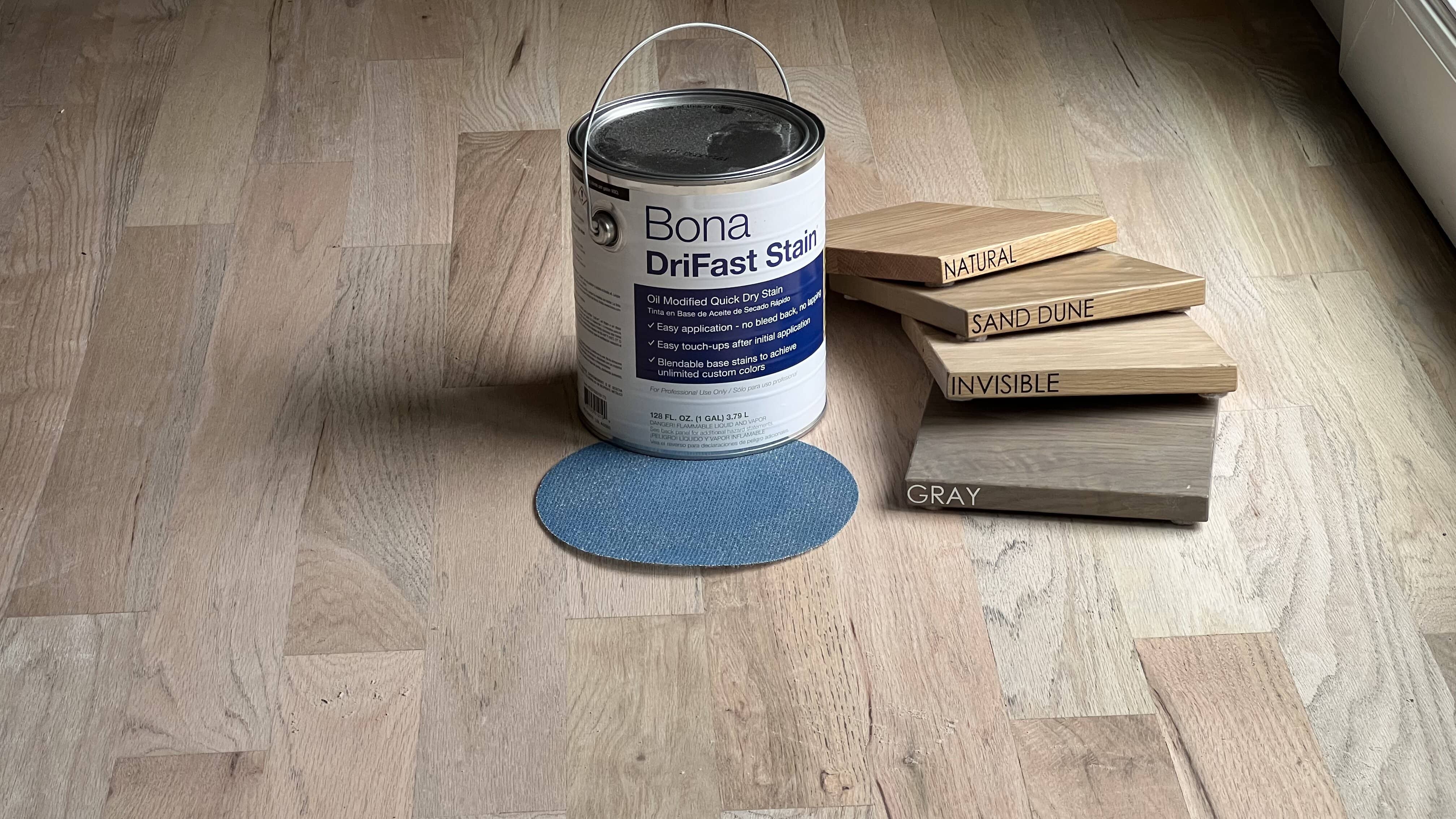
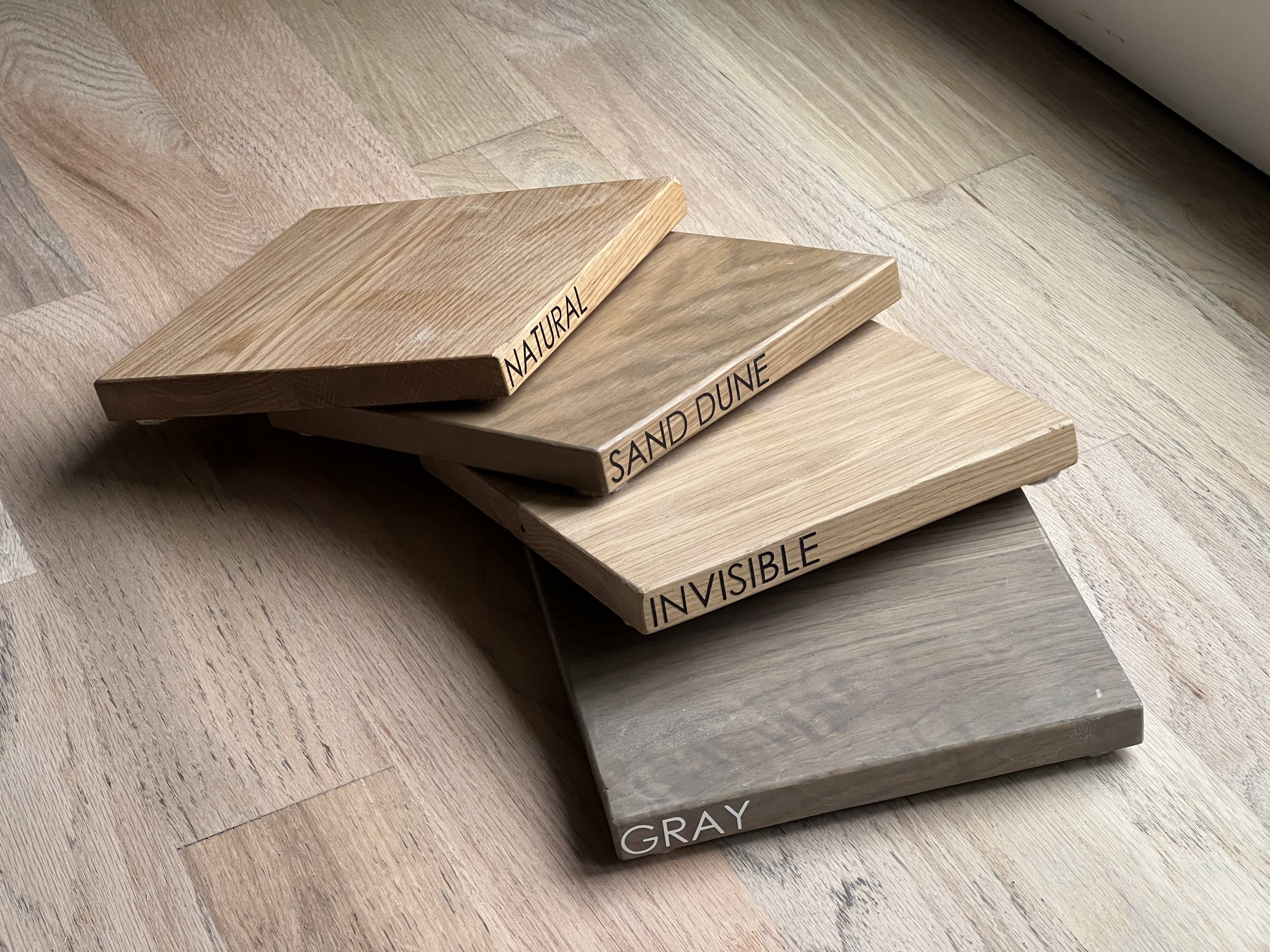
Before any stained job, we apply real stain samples on your actual floor, not on a separate board, and we make them large enough to read honestly, then look at them at different times of day. Because each species drinks stain differently, the same can of stain can look like two different colors on red oak versus white oak versus maple. And because our light shifts from cool morning to flat midday to warm evening, a patch that looked perfect at noon can surprise you at dusk. Testing on site, in your light, is the cheapest insurance there is against a floor you'll live with for decades.
Frequently Asked Questions
There's no single right answer, but warm-leaning mid-tones tend to flatter our soft, cool, overcast light best. Very dark floors can read flat and show every speck of dust and pet hair, while very pale cool-grays can feel chilly. Natural and mid-tone finishes also age more gracefully on a floor you'll keep for decades. The real test is always a sample patch in your own room.
Showrooms use bright, warm, even light. Our skies are cloudy more than 200 days a year, and that soft, cool, indirect daylight mutes warm tones and pulls gray and cool tones forward, much like a north-facing room. The wood and stain haven't changed, the light has. That's exactly why we lay sample patches in your actual rooms and view them morning, midday, and evening before committing.
Both are excellent. White oak is slightly harder, has a tighter grain and a more neutral undertone, and takes stain very evenly, which is why it carries today's natural looks so well. Red oak is a touch softer with a warmer, pinkish tone and bolder grain that stains darker but can blotch. If you're matching existing red oak, stick with red oak; for a fresh, even, on-trend look, white oak is usually our pick.
Matte hides scratches, dust, and pet hair best because it reflects almost no light, so imperfections don't catch the eye. Satin is a close, slightly more polished second. Semi-gloss and gloss show every scuff and dust bunny and need more frequent cleaning. A wire-brushed or textured surface helps disguise wear too. For most busy Puget Sound households with kids, pets, and tracked-in grit, we recommend matte or satin.
You don't have to avoid them, but go in clear-eyed. Very dark floors show dust, hair, and footprints constantly and can read heavy under our overcast light. Cool grays can feel chilly in soft northern light and were a strong trend that many homeowners later tired of. On a floor that may last 30-plus years, natural and warm mid-tones are the safer long-term bet. If you love a dark or gray look, test a large patch first.
Often, yes. Many early-1900s homes around Seattle and Tacoma have original vertical-grain Douglas fir, and it's beautiful, warm, and full of character. Fir is a softwood, roughly half as hard as red oak, so it dents and scratches more easily, but in a Craftsman or bungalow that patina is part of the charm. We'll assess whether the existing fir is sound enough to sand and refinish or whether replacement makes more sense, and walk you through the options at a free estimate.