When our phone rings and someone's voice is a little too fast, it's almost always the same thing: water on a hardwood floor. A dishwasher that ran overnight. A plant saucer that cracked. A window that leaked during a Puget Sound windstorm. A toilet supply line.
Here's the short version of what we tell every one of them, and what decides whether this becomes a minor repair or a major project.
Stop the water. That’s rule #1.
Before anything else — before calling a contractor, before taking a picture, before posting in the neighborhood Facebook group — stop the water from reaching the floor. Shut the valve, move the leaky plant, unplug the fridge, turn off the main if you have to. If water keeps coming, every hour makes the eventual repair bigger.
Dry it fast — faster than feels reasonable
- Sop up standing water with towels immediately. Do not wait for it to evaporate.
- Run fans directly at the wet area — ceiling fans, box fans, oscillating fans, whatever you have.
- Crack windows if outdoor humidity is low. In damp PNW weather, close the windows and run a dehumidifier instead.
- Pull up area rugs and move furniture off the wet area so it can breathe.
- If you have a wet-dry vac, use it. It pulls water out of the gap between boards that towels can't reach.
Why quick drying stops mold before it starts
If you catch water quickly and dry it within hours, mold usually never gets a foothold. Constant moisture on the floor is what creates the problem — water sits on the surface, seeps into the seams, reaches the subfloor, and now you have a warm, dark, damp environment for mold. That's when remediation gets expensive.
Signs the water already got below the surface
- Cupped boards (edges raised higher than the center)
- Crowned boards (center higher than the edges — usually happens after cupping, when the wood dries unevenly)
- Dark staining that doesn’t fade as the surface dries
- A musty smell that persists after the floor feels dry to the touch
- Soft or spongy spots when you step on the floor
If you see any of these, call a flooring pro before putting furniture back. The repair may still be manageable, but it usually requires pulling up affected boards, drying the subfloor, and replacing what's compromised.
When it's just a surface problem (the good news)
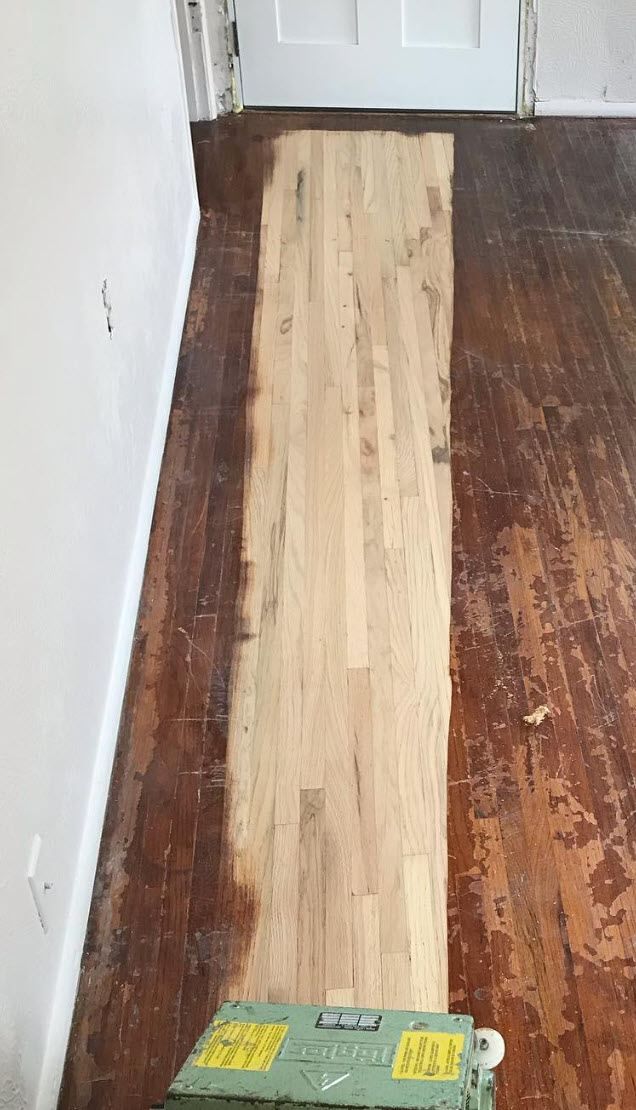
Most water events we get called on are surface-only. You caught it fast, the finish protected the wood, the boards dried flat. In that case the fix is usually a spot repair — sometimes just cleaning and buffing, sometimes sanding down a small section and blending the finish. Often less than $1,000.
The homeowners who keep repairs small are the ones who acted in the first 24 hours. Every hour you wait, the cost goes up.
When to call us
If the water source is stopped and the floor looks stable after 48 hours of drying, you may be in the clear. If you see cupping, staining, or smell anything musty — call. We cover Tacoma, Seattle, Puyallup, Gig Harbor, Federal Way, Kent, and the rest of Pierce and King County with free estimates.
Frequently Asked Questions
Stop the source of water first, then sop up standing water with towels, run fans directly on the wet area, and use a dehumidifier to pull moisture from the air. Work fast — water that sits for more than a few hours can seep through the finish into the subfloor.
Not if you act quickly. If you stop the water and dry the floor within hours, mold usually never develops. Mold needs sustained moisture — it's the water you didn't catch that causes problems.
Often yes. If the cupping is minor and the subfloor isn't compromised, the boards may flatten out as they dry over weeks. If cupping persists, or you see crowning or soft spots, the affected boards usually need to be replaced and the area refinished.
A surface-only repair caught quickly is often under $1,000. A spot board replacement with blended refinishing is typically $1,500–$4,000. Subfloor damage with mold remediation can run into five figures — which is why the first 24 hours matter.
Almost always repair. Hardwood is uniquely suited to spot repair and refinishing — it's why it's lasted as a flooring material for centuries. Full replacement is only needed when water has destroyed the subfloor or damaged a large enough area that a clean repair isn't possible.